QUICK ANSWER: A large tree near house removal is not a job you can fell in one piece. When a mature tree stands within a trunk-length or two of your roof, there is no safe direction to lay it down, so trained crews take it apart from the top down instead. That usually means climbing or a bucket, controlled rigging to lower each cut piece on ropes, and often a crane to lift heavy sections clear of the structure. The safest first step is an on-site assessment that reads the tree's lean, defects, and drop zone before any saw touches wood.
The maple was there before the house, and for forty years nobody gave it a second look. Then a wet March storm rolls through Beaver County, the ground turns to soup, and the whole crown leans a few more degrees toward your second-story bedroom. Now you're standing in the driveway with the same question thousands of people in the Ohio Valley ask every year. The tree has to come down. But it's close enough to touch the gutters, so how does anyone take it out without putting it through the roof?
That gap between the trunk and the siding changes the whole job. A tree in an open field gets notched and dropped in one clean fall. The same tree twelve feet off your house cannot, because there's nowhere for it to land. Everything below is what a real crew looks at before they take on a tree that's crowding a house: why the easy method is off the table, how to tell a genuine hazard from a healthy giant, and the ways pros get it on the ground one controlled piece at a time.
Why proximity is the whole problem
Dropping a tree in one piece needs a clear landing zone at least as long as the tree is tall, plus swing room on both sides. Most yards don't have it. When a sixty-foot oak grows twenty feet from the house, the math never works, no matter how good the sawyer is. Send it any direction and it crosses a roof, a fence, a power drop, or the neighbor's garage.
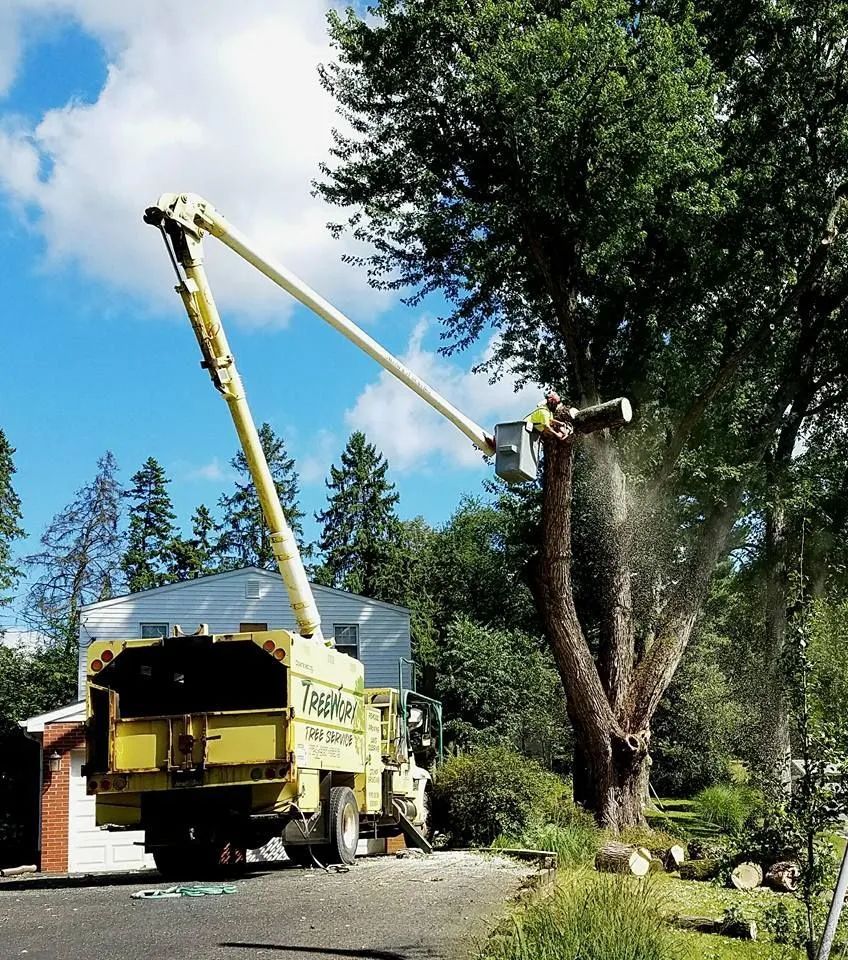
So the plan flips. Instead of felling the tree, the crew takes it apart. They work from the top down, pulling the canopy and trunk off in sections small enough to control, then lowering or lifting each piece to a safe spot on the ground. Nothing big ever falls on its own. Every cut is planned around where that piece goes and what sits underneath it.
That switch, from felling to dismantling, is the reason a tree near your house needs a different level of planning and gear than one out in the open. It's slower. It's more technical. And it's where the real skill of the trade shows up.
The drop zone is the first thing a pro checks. Before anyone leaves the ground, the crew walks the site and maps what sits in every possible fall line: the roof, the service wires, the AC unit, the flower beds, the parked cars. Arborists call these "targets," and the entire removal is built around keeping wood away from them.
Signs the tree is a real hazard, not just an eyesore
Not every big tree near a house has to go. Plenty of mature trees are perfectly sound and worth keeping. The ones that genuinely need removal usually tell on themselves. Walk the tree from the crown down to the roots and watch for the red flags that make a crew nervous.
A sudden or worsening lean
Lots of trees grow at a slight angle their whole lives and never cause trouble. The lean that matters is a new one, especially after a storm, and especially when the soil on the high side is cracking or lifting. On the hilly, clay-heavy ground across western Pennsylvania and eastern Ohio, saturated dirt lets a root plate slip fast.
Dead wood up in the canopy
Big dead limbs high in the crown have a nickname in this trade: widow makers. They drop on calm days with no warning. A canopy that's thinning, lopsided, or holding several bare branches is telling you something's rotten inside.
Cracks, cavities, or soft spots in the trunk
Vertical cracks, open seams, and pockets of decay all chip away at the trunk's ability to hold weight. Two cracks on opposite sides of the trunk are the scary ones, because they often mean the roots are already giving out.
Mushrooms or heaving soil at the base
Fungus growing at the root collar usually means the roots are rotting, even while the top still looks green. Soil that's buckling or cracking in an arc around the base can mean the root plate is starting to tip up. Roots spread at least twice as far as the tree is tall, so old trenching, a driveway pour, or a foundation dig anywhere in that zone can quietly hollow out a tree's support years before it shows.
A tight fork low on the trunk
Trees that split into two or more stems down low, with a narrow V-shaped union stuffed with bark, are prone to peeling apart, often dropping half the tree onto whatever's below.
WARNING: A tree that has shifted or shed limbs after a storm may be holding enormous tension in the wood and roots that are left. Don't walk under it, park under it, or try to "test" the lean. Keep people and pets clear of the drop zone and get a professional to look at it before anyone goes near the base.
Why you can't just cut it down yourself
The rented ladder and a big-box chainsaw look like enough. They're not. Taking down a tree that hangs over a house is one of the most dangerous jobs in the trades, and every bit of that danger multiplies once the tree is already compromised.
A leaning or decayed tree doesn't cut the way you expect. Wood under tension can split, kick back, or barber-chair straight up the trunk the second the saw frees the fibers, and the stem goes somewhere nobody planned. Now add a ladder, a roofline, and live service wires overhead. The margin for a mistake is gone. People who do this safely spend years learning how loaded wood behaves, how to set rigging so a cut piece swings away from the house instead of into it, and how to spot a defect before they commit the blade.
Climbing versus a bucket. On a lot of backyard removals, a climber goes up on ropes and saddle, sets the rigging points, and works down the tree limb by limb. Where a truck can reach, a bucket lets the crew get at the canopy from outside the tree, so a suspect trunk never has to carry a climber's weight.
How pros remove a tree that's too close to the house
There's no single method. A good crew matches the technique to the tree, the target, and the way a truck can actually get in. A few approaches do most of the work, and they often run together on the same job.
Sectional dismantling
The crew disassembles the tree from the top down. A climber or bucket operator strips the outer limbs first, then chunks down the main stem in short lengths. Each piece stays small enough to handle by hand or hardware, so nothing heavy ever free-falls. This is the everyday method for tight yards where a crane can't reach.
Controlled rigging
When a piece is too big or too well-placed to just drop, it comes down on ropes. The crew rigs slings, blocks, and a friction brake at the base so a groundworker can feed out the line and settle each cut piece down soft, right where they want it. Rigging is what lets a crew float a heavy limb out over open lawn instead of onto the porch below. Done right, a two-hundred-pound section lands like someone set it there by hand.
Crane-assisted removal
For the biggest, heaviest, or nastiest trees, a crane rewrites the whole job. The arborist straps a section, makes the cut, and the crane picks that piece straight up and out to a landing zone, with nothing swinging back through the tree. Because the load never rides down through the trunk, a crane is often the safest call when a tree is dead, hollow, or leaning hard over the roof, or when a backyard is too boxed in to lower pieces by rope. It's quicker, too, which means fewer hours of a crew running saws above your home.
TIP: When a crew comes to assess, ask how they'll get each piece to the ground and where the equipment sets up. A straight answer about rigging points, crane placement, or bucket access tells you they've got a plan, not that they intend to improvise over your roof.
What makes a removal a crane job
Homeowners ask all the time whether their tree "needs" a crane. A handful of conditions push it that way. The tree is huge or dead-heavy. It's hollow or rotten enough that putting a climber in it is a gamble. It leans over the house at an angle that leaves no clean rope path. The yard is fenced and gardened tight, with no open ground to lower pieces onto. Or the tree is simply so big that a crane gets it down in a fraction of the time, cutting how long anyone works above your house.
None of that gets decided from the driveway. It comes out of a look at the tree's condition, the targets around it, and how a truck and crane can even reach the property, which is never a given on the narrow lots and steep drives around Pittsburgh and the old river towns.
Frequently Asked Questions
How close is too close for a tree to be felled in one piece?
A tree needs open ground at least as long as it's tall to drop whole, plus side room. If your house, wires, or a neighbor sit inside that circle, it must come down in sections.
Can a leaning tree near my house be saved instead of removed?
Sometimes. A long-standing, gentle lean on a healthy tree is often fine. But a new or worsening lean, especially with heaving soil or trunk cracks, points to failure. Only an on-site look tells them apart.
Will removing a big tree next to the house tear up my lawn or foundation?
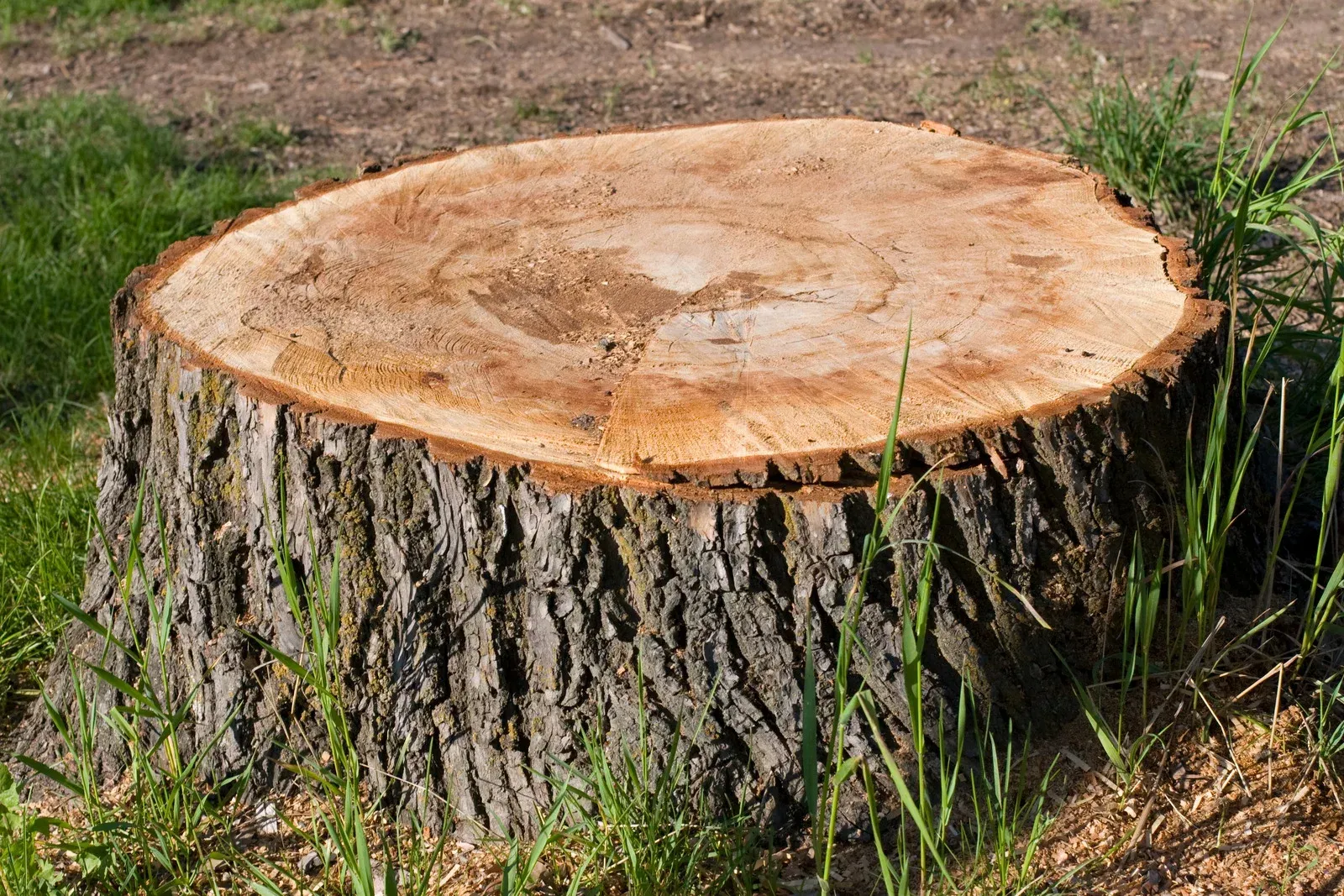
A planned removal protects everything below. Crews use rigging or a crane to keep weight off the ground and structure. Remaining roots rot down over time and don't threaten a sound foundation; stump grinding is separate.
How long does it take to remove a tree that overhangs a roof?
It depends on size, access, and method. A crane can bring a big tree down in a few hours by lifting heavy sections out fast, while a climbed, rigged removal in a cramped yard runs longer.
Is winter a bad time to remove a hazardous tree?
Not at all. Cold-weather removals are common and often easier, since frozen ground holds equipment and a bare canopy is simpler to read and rig. If a tree is already failing, waiting out ice season is riskier.
Get ahead of it before the next storm
A big tree crowding your house is not a problem you fix with a bigger saw. You fix it with a plan: read the tree honestly, respect the drop zone, and take it apart in pieces that never get the chance to fall the wrong way. Waiting until severe weather forces the issue often limits the safest options, while early evaluation allows the work to be planned carefully and completed with greater control around nearby homes, utilities, and landscaping.
With 200
years of combined experience, TreeWorx Tree Service
has helped property owners throughout Darlington, Pennsylvania, safely manage complex
tree removals
in challenging locations. Every tree presents its own structural concerns, surrounding obstacles, and removal strategy, making thoughtful planning an essential part of the process. Careful assessment, specialized equipment, and controlled removal techniques help reduce unnecessary risks while protecting nearby structures and preserving the safety of the surrounding property from start to finish.